
· by Michael Blair, Nashville's Electrician
Panel upgrades get recommended on sight of an older label and skipped in houses that genuinely need one. The two questions worth answering are whether the service is actually undersized for the load, and whether the panel itself is a known hazard.
When capacity is the real limit
A 100 amp service is adequate for a great many Nashville houses, particularly ones with gas heat, gas water heating and a modest cooling load. It becomes limiting with electric heat, a heat pump plus strips, a large shop, or an EV charger.
A load calculation answers it properly. It is a defined calculation an electrician performs, not a judgment call, and it is the thing to ask for before agreeing to an upgrade.
When the panel itself is the problem
Certain panel brands from the sixties through the eighties have documented failure-to-trip histories, and several are effectively uninsurable. Those are replaced on identification regardless of capacity.
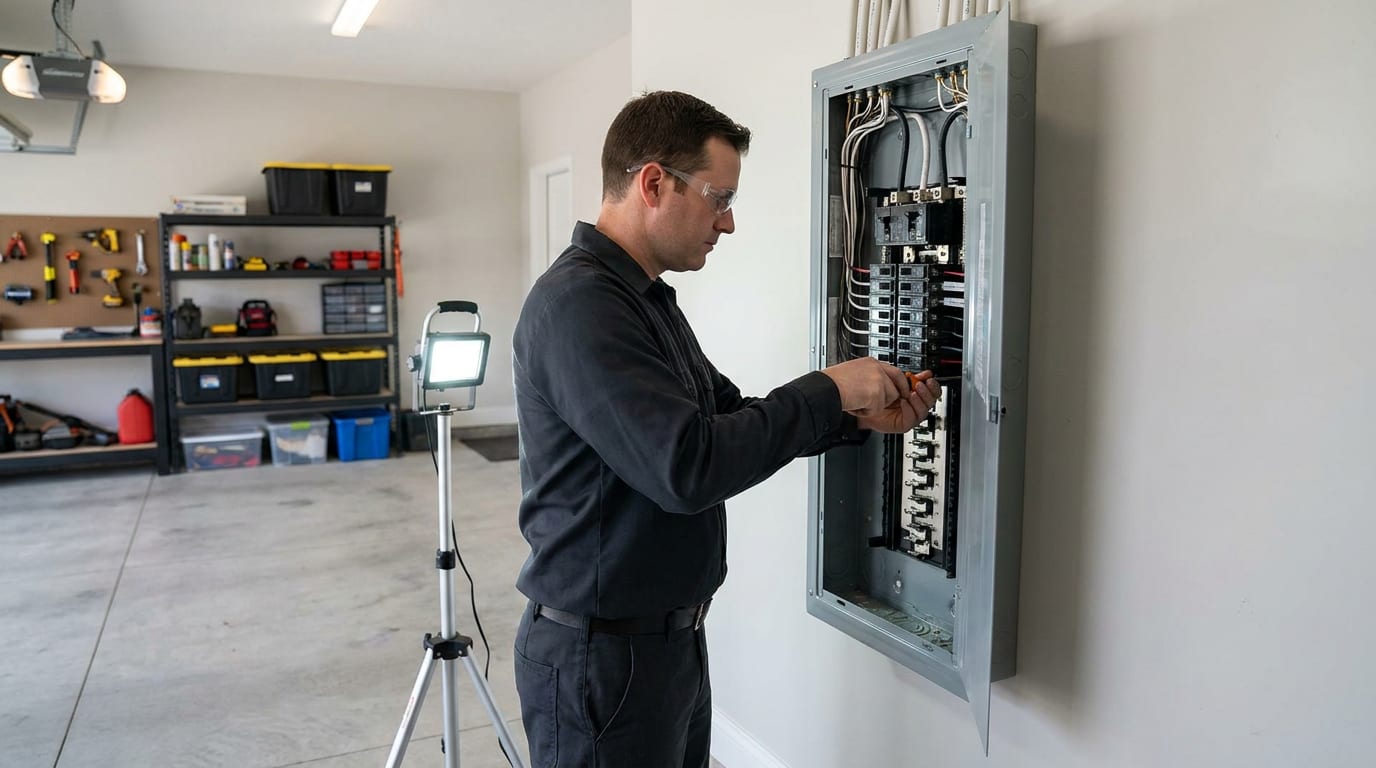
Beyond brand: rust inside the enclosure, scorching or discoloration at any breaker, a burning smell, double-tapped breakers, or a panel with no space and no room for tandems.
- Known hazard panel brands
- Rust, scorching or a burnt smell in the enclosure
- Breakers that will not stay set
- No available spaces and no tandem capacity
- Federal Pacific or Zinsco style equipment on sight
What an upgrade actually involves
More than swapping the box. It usually means new service entrance conductors, a new meter base, a grounding electrode system brought to current code, and coordination with the utility for a disconnect and reconnect.
It is permitted work with an inspection, and the inspection is the point — this is the connection between your house and the grid.
Adding a subpanel instead
Where the service capacity is adequate but the panel is simply full, a subpanel is often the cheaper and entirely legitimate answer. It adds spaces without touching the service.
It only works if the load calculation supports it. A subpanel on a service that is already at its limit adds circuits, not capacity, and moves the problem rather than solving it.