
· by Michael Blair, Nashville's Electrician
A home inspection report arrives a few days into a contract, and the electrical section is often the one with the most items and the least explanation. A buyer reads it as a list of hazards. A seller reads it as a list of demands. Neither is quite right.
Tennessee sets out what a licensed home inspector must look at, what they must report, and what they are not expected to do. Knowing those limits makes the report easier to read. Here is what the inspector checks, what the most common call-outs mean, and who can make the repairs before closing.
What does a Tennessee home inspector check in the electrical system?
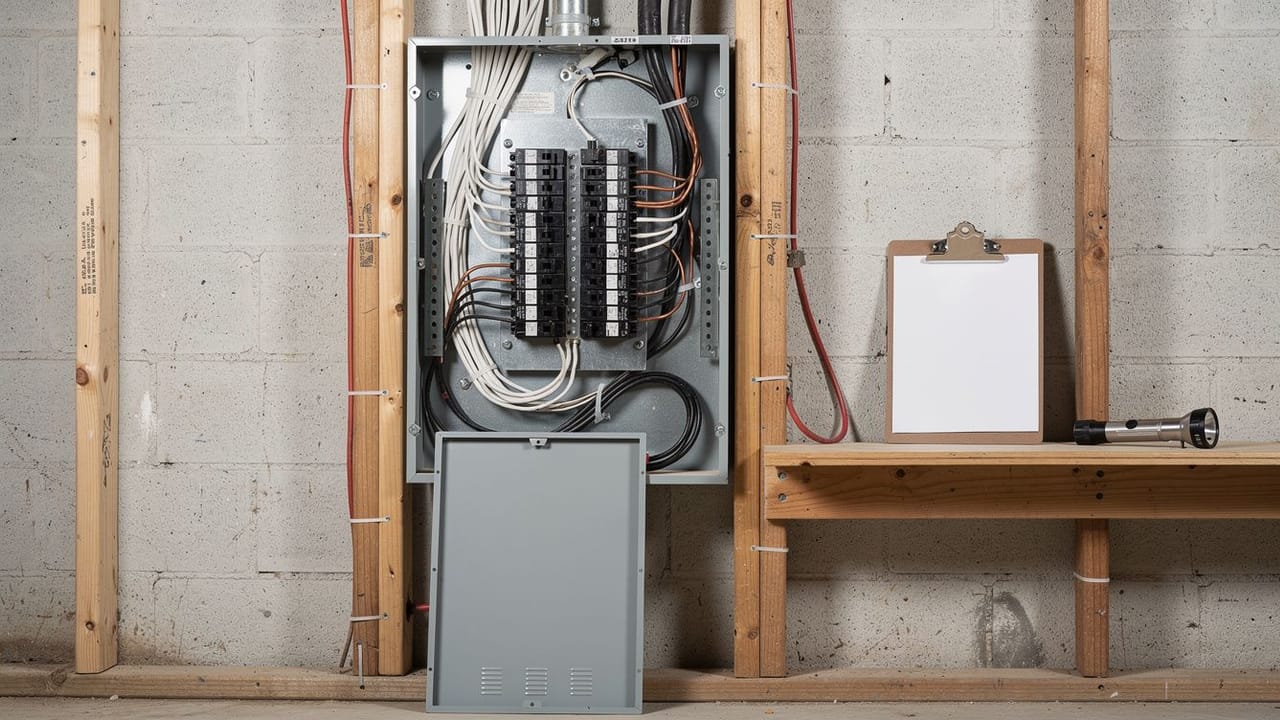
The service, the panels and a sample of what is in the rooms. Tennessee’s standards of practice for home inspectors, Rule 0780-05-12-.10, has the inspector look at the service entrance conductors, the service equipment and grounding, the main overcurrent device and the distribution panels, and the branch circuit wiring with its breakers or fuses, including whether wire sizes match the overcurrent protection.
In the living space the rule asks for a representative number of fixtures, switches, fans and receptacles, not every one. Receptacles within six feet of plumbing fixtures, in the garage and outdoors are checked for polarity and grounding, and GFCI devices are tested. The inspector also reports the smoke alarms present, any that are painted over or blocked, and any more than ten years past manufacture.
The limits matter as much. The inspector may remove the panel covers but is not required to put a tool or tester inside the panel or to operate any breaker other than a GFCI. And the rule’s general exclusions say inspectors do not have to report on compliance with adopted codes. A report is a condition survey, not a code inspection.
Is a double-tapped breaker always a defect?
No. A double tap means two wires under one breaker terminal, and whether that is acceptable depends on how the breaker is listed. Some are made for it. Schneider Electric says its QO and QOB breakers from 10 to 30 amps accept two copper wires under one terminal, in sizes 14 through 10 AWG, and excludes its QOT tandem breakers and its GFI, AFI and CAFI types.
A breaker without that listing takes one wire per terminal. Where two wires share a terminal that was not made for them, one can sit loose, and a loose connection heats up under load. The fix is usually a short pigtail joining the two wires to a single lead under the terminal, or a separate breaker if there is room.
So the first thing we do with a double-tap note is read the breaker’s label. If it is listed for two conductors and the wires are the right size and material, we say so in writing, which gives the seller something to hand back to the buyer.
Why does the report call out aluminum wiring?
Because Tennessee’s rule requires it. The inspector must report any readily accessible single-strand aluminum branch circuit wiring, the kind used on ordinary 15- and 20-amp circuits in some houses built or added onto from the mid-1960s into the 1970s.
The concern is the connections. The CPSC’s Publication 516, Repairing Aluminum Wiring, reports that a survey done for the agency found pre-1972 aluminum-wired homes 55 times more likely than copper-wired homes to have at least one outlet connection reach fire-hazard conditions. It also notes that failing connections often give no warning first.
CPSC’s permanent repairs are rewiring with copper or pigtailing every aluminum connection with a COPALUM crimp connector, installed by an electrician trained on that tool, with AlumiConn connectors as its alternative. Twist-on connectors are a temporary fix in its view. Our post on what old wiring in Nashville homes means covers the other wiring types an inspector may find.
Who can make the repairs before closing?
A licensed electrician, or the owner of the house under a permit of their own. Tennessee Rule 0780-02-01-.05 says electrical work that requires inspection cannot start until a permit is issued. A homeowner may do the work on their own residence without a license under a residential property owner’s permit, which covers only the owner and immediate family and is limited to one in twelve months.
For a seller with a closing date, the permit is the useful part. A repair that has passed inspection is easier to show a buyer than a receipt. Ask whoever does the work for the permit number.
Many inspection lists come down to a handful of items for our troubleshooting and repair crews: a missing GFCI, an open ground, a double tap, a cover with a missing screw. Bigger findings go to rewiring or a panel visit. If you are buying or selling in Murfreesboro or anywhere around Nashville, send us the electrical page of the report and we will tell you what each item takes.
Sources
- Tenn. Comp. R. & Regs. 0780-05-12-.10, Standards of Practice for Home Inspectors (Cornell LII) — Electrical items the inspector inspects, describes and reports; single-strand aluminum branch wiring and smoke alarms; panel covers removed but no tools inside the panel; code compliance excluded
- Schneider Electric, Are any of the QO breakers rated to accept 2 conductors under 1 terminal? (FA97891) — 10 to 30 A QO and QOB breakers accept two copper conductors, 14 to 10 AWG, under one terminal; QOT and GFI, AFI and CAFI types excluded
- U.S. Consumer Product Safety Commission, Publication 516, Repairing Aluminum Wiring (June 2011) — Pre-1972 aluminum-wired homes 55 times more likely to have a connection reach fire-hazard conditions; few warning signs; COPALUM and AlumiConn repairs; twist-on connectors temporary only
- Tenn. Comp. R. & Regs. 0780-02-01-.05, Electrical Permits (Cornell LII) — Permit before work requiring inspection; residential property owner’s permit limited to the owner and immediate family, one in twelve months
FAQ
Electrical Items on a Home Inspection Report — questions
What does a double tapped breaker mean?
Two wires are fastened under a single breaker terminal. That is acceptable only on a breaker listed for two conductors, such as Schneider Electric’s 10 to 30 amp QO breakers with two copper wires of 14 to 10 AWG. On a breaker made for one wire, the usual fix is a pigtail to a single lead.
Does a home inspector check if the wiring is up to code?
Not in Tennessee. The state’s standards of practice for home inspectors exclude reporting on compliance with adopted codes. The inspector reports on the condition of the service, panels, branch wiring and a sample of devices, and on certain items the rule names, such as single-strand aluminum branch wiring and smoke alarms.
Does a home inspector test every outlet?
No. Tennessee’s rule asks for a representative number of receptacles, switches and fixtures, plus polarity and grounding checks on receptacles within six feet of plumbing fixtures, in the garage and outdoors, and a test of the GFCI devices. An outlet the inspector did not reach can still have a problem.
Do home inspectors take the cover off the electrical panel?
They may. Tennessee’s standards of practice let the inspector remove the covers of the main and auxiliary panels, but do not require inserting any tool or tester inside the panel or operating breakers other than GFCIs. Findings inside the panel are visual, which is why an electrician often follows up.
Can a seller fix electrical problems themselves before closing?
In Tennessee, an owner may do electrical work on their own residence without a license under a residential property owner’s permit. It covers only the owner and immediate family, one permit in twelve months, and the work is inspected. Many sellers hire a licensed electrician instead so the repair is documented for the buyer.